

For the first time, researchers may have found a reliable way to measure how severe someone's depression is using a standard blood draw. A study published in Molecular Psychiatry found that a specific signal in blood platelets tracks closely with depression symptom severity in people with major depressive disorder and stays consistent enough over time to be clinically useful. It's an early but meaningful step toward giving doctors an objective tool for assessing and monitoring depression, beyond questionnaires and self-report alone.
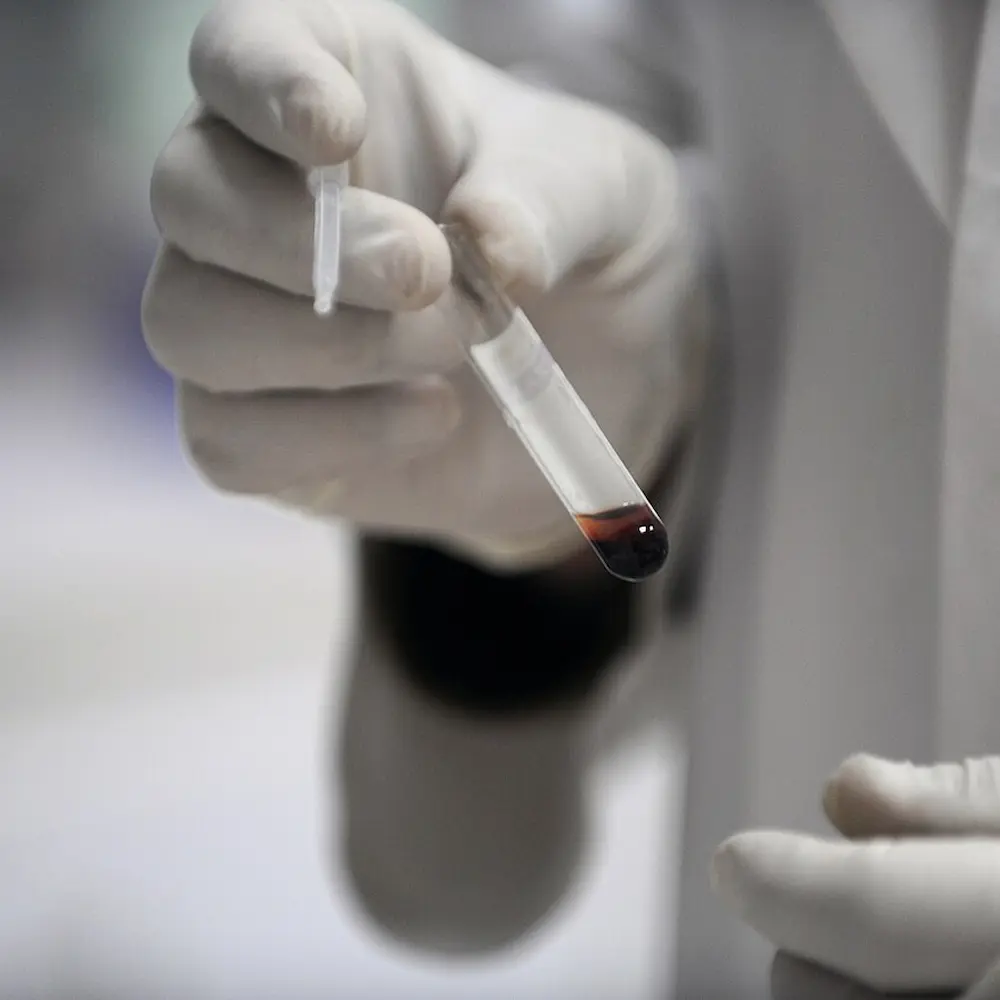
Study Overview
Researchers at the University of Illinois Chicago and the Jesse Brown VA Medical Center tested a blood-based biomarker in adults with major depressive disorder (MDD) who were already receiving treatment, alongside healthy controls.
The biomarker centers on a protein called Gsα (pronounced "G-alpha-s"), which plays a key role in how brain cells communicate. In people with depression, this protein gets stuck in certain fatty regions of the cell membrane where it can't do its job properly. Effective antidepressants, including SSRIs and ketamine, have previously been shown to release it from that trapped state, which appears to be part of how those treatments work.
To measure where Gsα sits in the cell, researchers used a simple lab test on platelets (the same small blood cells involved in clotting). The test checks how well the Gsα protein responds when stimulated: a lower response means the protein is more trapped, which corresponds to a more depressed state. Participants were assessed twice, two weeks apart, so researchers could also check whether the measurements were stable over time.
Key Findings
- The blood test tracked closely with how depressed someone was. Across both visits, people with more severe depression consistently showed lower responses on the platelet test. The more depressed someone was, the lower the signal, and this relationship held up at both time points. People with at least mild depression had significantly lower readings than those whose symptoms were in remission or who were not depressed at all. Those with moderate depression showed the lowest readings of any group.
- The readings were stable and consistent. Both the depression scores and the blood test results stayed consistent between the two visits, two weeks apart. This matters because a clinical monitoring tool only works if it gives reliable readings over time, not just a one-time snapshot.
- The test is designed to be practical. Unlike many research-grade biomarker assays that require expensive or specialized equipment, the researchers describe this one as capable of being scaled for routine lab use. It requires only a standard blood draw, making it straightforward to collect in a typical clinical setting.
Why It Matters
Depression is one of the most common conditions in the world, yet diagnosing it and tracking treatment response still relies almost entirely on how someone describes their own symptoms. There is currently no approved objective biological test for depression: no blood panel, no scan, nothing equivalent to the tests used to diagnose diabetes or thyroid disease.
This creates real problems. Diagnosis can be delayed for months or even years. Doctors have no way to know whether a medication is biologically working until a patient reports improvement ,which can take weeks. And it's difficult to distinguish major depression from other mood disorders without objective data.
This research builds on more than a decade of work from the same team, which has consistently shown that Gsα behavior in cells reflects depressive states in a measurable way. What's new here is that the test was used in patients who were already in treatment (a much more realistic clinical scenario) and that it tracked symptom severity rather than just separating depressed from not-depressed. Those are important differences for a tool intended to be used in real clinical settings.
This isn't a finished diagnostic test. The study was relatively small, and the researchers are clear that larger studies across more diverse populations are needed before this could be used in practice. But it represents a meaningful step in a field where objective tools have been notably absent.
Takeaways
- A blood test measuring a specific platelet response was consistently linked to depression severity. The worse the depression, the lower the signal.
- The readings were stable across two visits two weeks apart, an important property for a clinical monitoring tool.
- The test is designed to be scalable for standard lab use, not just specialized research settings.
- This is promising early-stage research that needs replication in larger, more diverse groups before it becomes a clinical tool.
- If validated, a test like this could help doctors track whether treatment is working at a biological level, even before a patient feels better, which could meaningfully change how depression care is managed.
Read the research: Gunay A., Targum S.D., Leow A.D., Ajilore O., Rasenick M.M. A simple platelet biomarker is associated with symptom severity in major depressive disorder. Molecular Psychiatry 30, 3551–3559 (2025). https://doi.org/10.1038/s41380-025-02941-1